
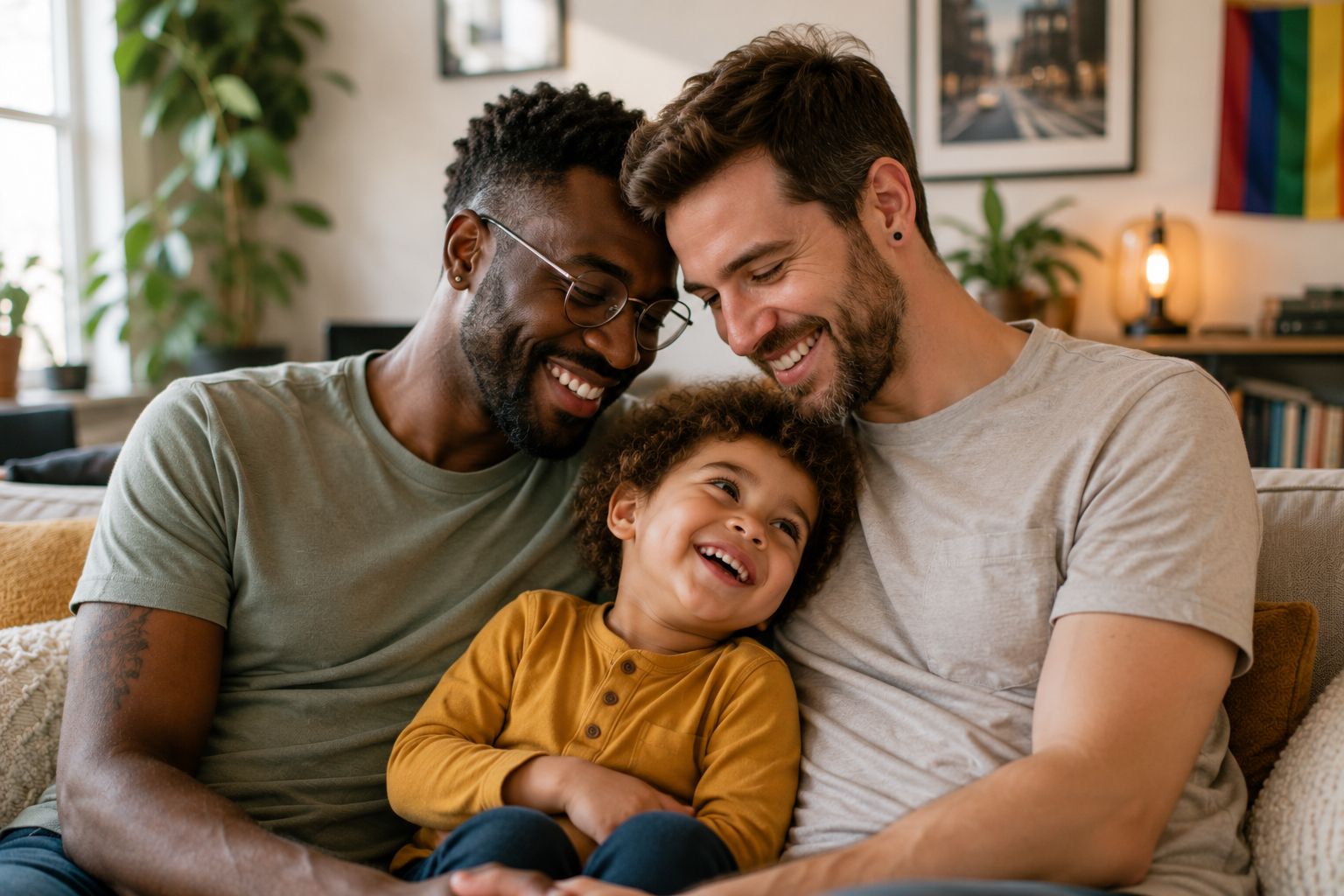
Who is surrogacy for in 2026?
Not so long ago, surrogacy was often framed as a niche solution, something quietly pursued and rarely discussed. Today, that picture has changed. Surrogacy now sits at the centre of a much broader conversation about how families are formed. And while diverse family structures are not new, what is new is who is increasingly shaping the surrogacy landscape. So, who is surrogacy for now? More and more, the answer points to a clear shift. Not in who exists, but in who is leading.
A shift in who is driving surrogacy
LGBTQ+ families are not a new concept. Nor is single parenthood. What has changed is their role within the surrogacy space itself. In the UK, data from the Human Fertilization and Embryology Authority shows a striking shift. Opposite-sex couples now account for just 39% of surrogacy cycles, while 61% are made up of other family types, including same-sex couples and single intended parents.
That is not a marginal change. It is a rebalancing. Further clinical research in the UK has shown that same-sex male couples have not only increased their use of surrogacy, but in some centres have surpassed heterosexual couples in initiating treatment cycles. This is the key distinction. This is no longer about inclusion. It is about influence.
From participation to leadership
For years, same-sex couples were described as a growing part of the surrogacy story. Now, they are a central part of it. UK court data reinforces this trajectory. Applications for parental orders from same-sex couples have increased significantly, rising from just 69 cases in 2014 to over 350 applications in recent years.
At the same time, academic research shows that in real-world UK surrogacy journeys, around 40% are already for same-sex male couples, a proportion that continues to rise.
Across Europe, this shift is mirrored through cross-border trends. Gay male couples and single men are among the most active groups pursuing international surrogacy pathways, often due to legal and structural limitations in their home countries.
The rise of single intended fathers
Alongside same-sex couples, another group is quietly but steadily reshaping the surrogacy space, single men. In the UK, this shift has become measurable since legal changes allowed single individuals to apply for parental orders. In the years following that change, the number of single men pursuing parenthood through surrogacy has increased significantly.
While still a smaller segment overall, the direction is clear. This reflects a broader evolution in how fatherhood is understood. It is no longer tied exclusively to partnership. It is increasingly a deliberate, independent choice. Single intended fathers tend to approach the journey with a high level of intention. They build strong support systems, engage deeply with the process, and plan carefully for life beyond birth. They are not waiting for a traditional framework to exist; they are building one.
Changing family structures
This shift in surrogacy does not exist in isolation. It sits within a wider evolution of family life across the UK and Europe. Traditional family structures remain, but they are no longer the only reference point. More individuals are forming families in ways that reflect their personal circumstances rather than societal expectations.
At the same time, more people openly identify within the LGBTQ+ community, and increasing numbers are choosing to become parents. Importantly, these families are not only forming, they are thriving. Research consistently shows no difference in outcomes for children raised in same-sex households compared to heterosexual ones. In the context of surrogacy specifically, clinical data has also shown no significant difference in success rates between same-sex male couples and heterosexual couples.
The implication is clear. The structure of a family is becoming less relevant than the stability and intention behind it.
From visibility to normalisation
For many years, the conversation around LGBTQ+ families focused on visibility. Today, the conversation has moved on. These families are no longer asking to be seen. They are already part of the fabric of modern parenthood. What we are witnessing now is a shift from visibility to normalization, and within surrogacy, from normalization to leadership.
This shift has practical implications. It influences how programs are designed, how matching is approached, how legal frameworks evolve, and how support systems are structured. It changes the centre of gravity in a journey.
The role of support in a changing landscape
As this shift continues, one thing becomes increasingly important. Structure. Surrogacy is a complex process, medically, legally, and emotionally. As the intended parent profile evolves, so too must the systems that support it.
For same-sex couples and single intended parents, this often includes navigating crossborder legal frameworks, donor and surrogate matching, and long-term planning beyond birth. Having the right support in place is what transforms complexity into clarity and makes agency support more important than ever. At Be Parent, this is where the focus remains. Not just on facilitating a process, but on understanding who that process is now serving.
From private Journey to public conversation
Another shift we are seeing is how openly surrogacy is discussed. What was once considered deeply private is now part of mainstream conversation. Intended parents are sharing their journeys, support communities are expanding, and information is more accessible than ever before.
This increased openness has been supported by the rapid growth of the surrogacy field itself. Global surrogacy in 2026 is projected to more than double by 2031. That level of growth does not happen quietly. It reflects rising demand, broader acceptance, and increased accessibility across multiple demographics. At the same time, this visibility comes with responsibility. While information is more available, not all of it is reliable. Trusted guidance and experienced agency support are essential.
Looking ahead
As we move further into 2026, the direction is clear. Surrogacy is not expanding randomly; it’s evolving in response to who needs it most. And increasingly, that means same-sex male couples, single intended fathers, and individuals who do not fit traditional reproductive pathways.
Surrogacy is not redefining family on its own. It is simply reflecting a truth that has always been there. Families have never been one shape. What surrogacy does is offer a path, a thoughtful, supported, intentional path, for those who may not have seen themselves represented in traditional narratives. And in doing so, it is helping to shape a more inclusive understanding of what it means to belong. Because at its core, family is not about structure. It is about connection, commitment, and the choice to build something meaningful, together.
